
How Much Space Do You Need to Deliver a Shipping Container?

Why Site Space Planning Can Make or Break a Delivery

Site space cannot be ignored when planning to move a shipping container. Insufficient access is a common cause of unsuccessful shipments. This mainly stems from narrow driveways, overhead power lines, gates that restrict entry, or a general lack of space.  

Note that failed deliveries; 

  • Demand re-delivery attempts, which attract additional fees
  • Cause delays as your carrier sources for different equipment
  • Require storage fees in case the container delivery is rescheduled.
  • Result in lost time

Proper planning can help avoid such inconveniences.

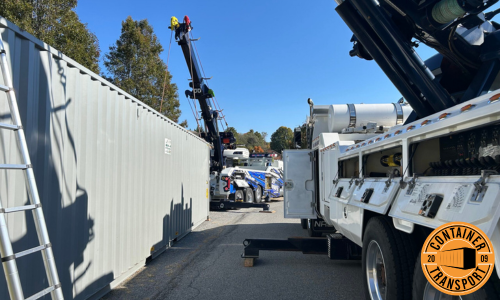
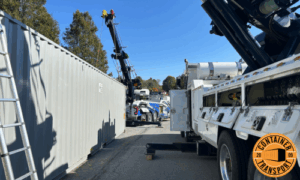
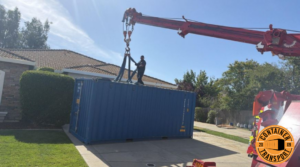
Crane lifting 40ft HC container for transport.

Plan Your Site Before You Book

It's advisable to assess your delivery site before scheduling transportation and not when the truck arrives. Doing so helps ensure the right equipment is dedicated from the start. Consider whether;

  • The access road or driveway is wide enough for commercial trucks.
  • There is enough space for the truck to maneuver. 
  • There are utility lines, overhead obstacles, or low-hanging tree branches.
  • The ground is firm and level to support the equipment and container.
  • The container needs to be left on the chassis or placed on the ground.
  • Fences, gates, or parked vehicles could interfere with delivery.

If you are unable to, Container Transport can advise you on preparing the site and determining the most suitable equipment for your site based on the photos you provide or satellite imagery.

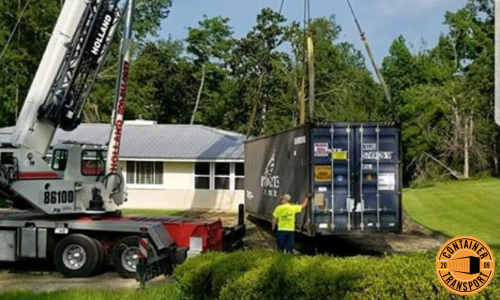
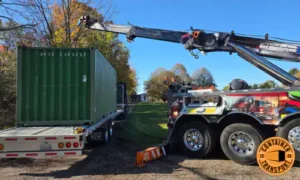
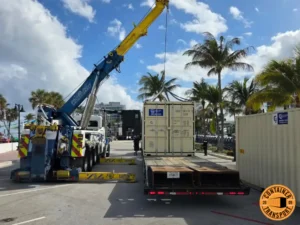
Crane lifting and loading Container on trailer.

How Much Length and Width Does the Truck Need?

Safe delivery of a shipping container depends on using the right equipment and having sufficient on-site space. The truck's length differs depending on the type and equipment used. Adequate clearance is therefore essential for successful delivery. That is;

  • Length clearance: Containers are typically 20 or 40 ft long and require trucks with an overall length between 40 ft and 80 ft.
  • 20-foot container deliveries require 55 to 65 ft total vehicle length.
  • 40-foot container deliveries require 70 to 80 ft total vehicle length.
  • Width clearance for navigating gates, turns, and driveways. Even when the truck fits seamlessly into an opening, there must still be enough room to turn and align the trailer. Watch out for mailboxes and utility poles. 

In addition to sufficient clearance, the turning radius of a tractor-trailer is crucial, as semi-trucks cannot make sharp turns. For instance, a tight driveway is hectic for the driver because it means; 

  • Inability to straighten the trailer for proper unloading
  • The possibility of striking curbs, landscaping, and fences
  • Conducting multiple backing maneuvers might not provide enough space.
  • They cannot direct the truck to make a complete turn without crossing into another lane.

Minimum Recommended Clearance Dimensions for a Standard Delivery

While specific requirements depend on the particulars of a move, there are general guidelines that can help you assess a site's accessibility for a standard container delivery.

Requirement

Minimum Recommendation

Gate Opening 

12 - 14 feet

Length

80 feet

Access Road Width

12 - 14 feet

Vertical clearance

16 feet

Turning radius

55 feet

If in doubt, Container Transport is readily available to help you evaluate the site and determine the right equipment for safe delivery. We require a delivery address, measurements, or photos for a thorough assessment.

What Overhead Clearance Is Required?

Poor overhead clearance is among the most common reasons for delayed, postponed, or returned shipping container deliveries. The space above the truck matters just as much as the space beneath it. The required space varies from one move to the next, as it's determined by the equipment, trailer, and truck. However, combined standard delivery trucks and container height require;

  • A minimum clearance of 14-16 feet, with the latter as the recommended clearance.

Note: When side loaders or tilt-bed trucks are used, the container may be lifted temporarily during unloading, needing additional space.

Overhead clearance is subject to:

  • Tree canopies and branches
  • Bridge clearance
  • Overhead power lines
  • Garage overhangs and roofs
  • Communication and cable lines
  • Utility poles and streetlights
  • Low railroad along the delivery route

Even when the truck and container successfully clear these obstacles, additional height might be required during positioning or unloading.

Who is Responsible for Flagging Overhead Obstructions Before Delivery

Customers and property owners are responsible for inspecting the site. Overhead obstructions should be handled prior to delivery. Doing so on the day of delivery can result in delays. If there are any limitations, you should inform the carrier accurately or provide photos. The driver inspects the site upon delivery.

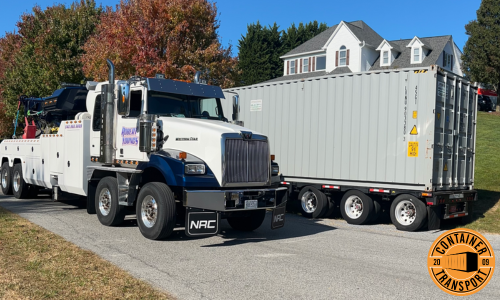
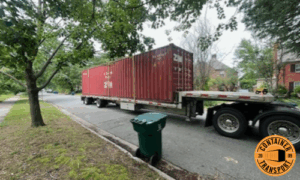
Shipping a 40hc Container.

What If Your Site Has Limited Overhead Clearance?

If your overhead clearance is limited, ensure you alert your carrier in advance so they can recommend the most practical alternatives or solutions, such as;

  • Using specialized equipment, such as Landoll trailers, to enable delivery even under difficult conditions.
  • Opting for different locations with better access
  • Hiring cranes to lift the container over the restrictions where possible
  • Removing temporary obstructions and trimming branches

Does It Matter Whether You're Getting a 20ft or 40ft Container?

Yes. The size of your shipping container affects the space needed for delivery. The room required for maneuvering, unloading, and safe placement increases directly with container size. Typically, containers measure:

Container Type

Exterior Length

Exterior Width

Exterior Height

20 feet

20 ft

8 ft

8 ft 6 in

40 feet

40 ft

8 ft

8 ft 6 in

40-foot High Cube

40 ft

8 ft

8 ft 6 in

Despite some similarities, a 40-ft container requires significantly more space for safe delivery.

20-Foot Container Delivery Space

A 20-foot container is suitable for limited spaces as it is lighter and shorter. It provides the driver with flexibility when

  • Navigating narrow driveways
  • Making tighter turns
  • Positioning the container in smaller spaces
  • Delivering containers to limited residential property spaces

40-Foot Container Delivery Space

A 40-foot container is larger, as it is twice the size of a 20-foot container, and therefore requires more space for delivery. It mainly requires;

  • Longer straight surfaces for unloading
  • Additional turning space for the trailer and truck
  • More room for positioning and aligning the container
  • Extensive clearance around fences and buildings

Note that even when the placement area is sufficient, additional room is required for safe entry, maneuvering, and exiting.

High Cube Container Delivery Space

High-cube containers require extra care when assessing overhead clearance, as they are an inch taller than standard containers. Additionally, when moving a high-cube container, it's advisable to disclose the desired timeframe to your carrier so they can also determine adequate clearance along the delivery route.

The key considerations should be building overhangs, tree canopies, garage entrances, utility lines and  vertical clearance for safe unloading.

The choice of container depends on more than just size. It also depends on intended use and available space. Before choosing a container, consider the available room to place the container and to accommodate the truck, trailer, and equipment used for its delivery.

What Ground Conditions Work and Which Ones Cause Problems?

The availability of space for container delivery is just as important as the condition of the space. Not all spaces can support the container's substantial weight, which means it can, at times, be damaged or become stuck due to site conditions.  Site selection is thus very critical. Best surfaces for a shipping container delivery are;

  • Compacted gravel that is installed effectively to support heavy vehicles
  • Concrete pads with a level foundation for stability
  • Asphalt driveways and parking areas 
  • Firm and Level ground without a significant slope and poor drainage

On the contrary, there are grounds that can result in serious complications, for instance:

  • Soft or loose soil cannot support the truck's weight.
  • Steep slopes or uneven terrain are unsafe for unloading.
  • Wet, waterlogged ground or muddy ground that might result in tires or trailer support sinking
  • Grass lawns, recently filled areas, and fresh landscaping.

Note that the above-ground conditions can collapse under the truck or trailer. In such an event:

  • The delivery might be halted immediately.
  • The container can cause challenges when unloading.
  • There may be a need for heavy recovery equipment to free a stuck truck, which could increase service charges.
  • There might be damage to the property.

How to Prep an Unprepared Site Before Delivery Day

Shipping container delivery sites that are not suited to accommodate the containers can be prepared through;

  • Compacting loose soil and adding gravel or crushed stone 
  • Installing an asphalt or concrete pad for long-term use
  • Improving drainage to prevent water retention even after rains
  • Filling deep ruts, removing debris, and leveling uneven areas

If you are uncertain about the site’s condition, Container Transport helps you find a solution before scheduling. We use photos and any other information to determine the required rectifications where possible. Ensuring the ground is prepared prior to the move minimizes risks and unforeseen costs.

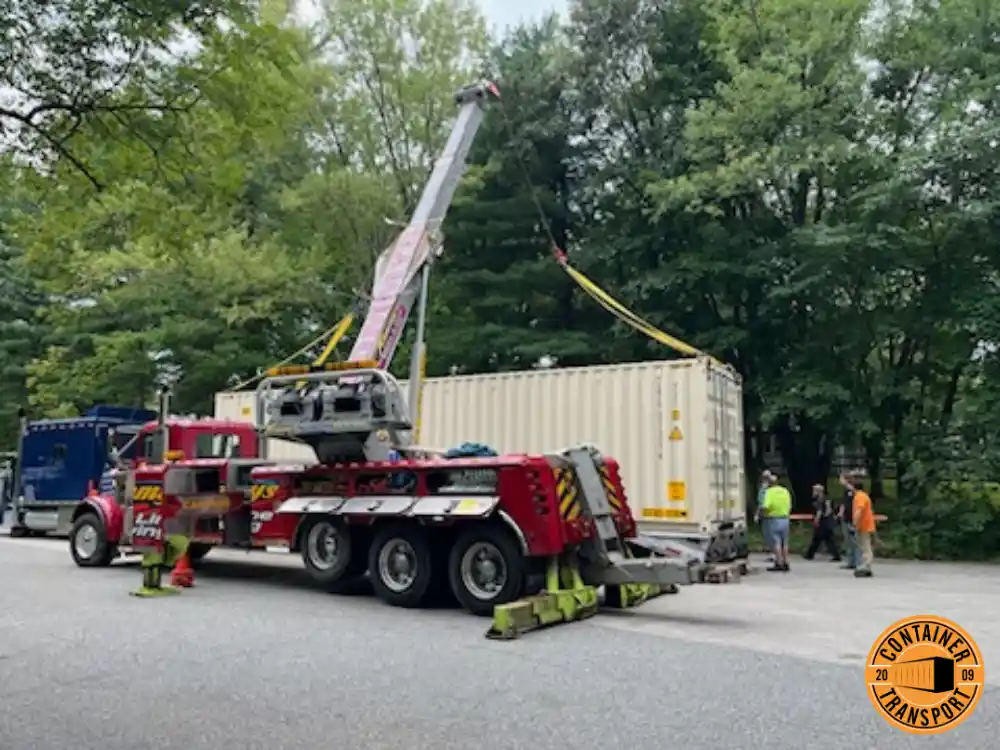
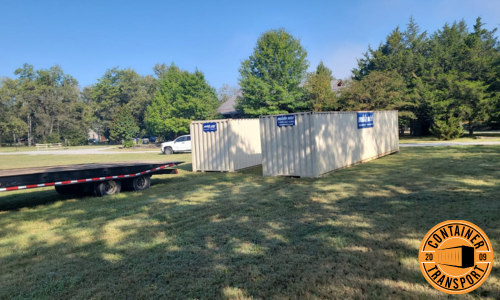
Transporting 2 containers

Why Choose Container Transport?

Container Transport is the go-to shipping container moving company nationwide. We have sufficient resources and know-how in site planning, including selection, assessment, and preparation. Our drivers are experienced in maneuvering different routes and site conditions, including non-standard and difficult locations. Our specialists are just a click away, with assistance tailored to your container needs. Reach us for a free estimate.

Related Resources

How Much Space Do You Need to Deliver a Shipping Container

Choosing the right container is not enough to ensure the safe transportation of a shipping container. Ample space for the truck to maneuver is just as important.

Side Loader vs Landoll vs Crane for Container Moving

Most people imagine container transport simply requires putting the container on a truck. On the contrary, the equipment used plays a major role in the move's succes...

Can You Move a Loaded Shipping Container?

Enjoy this in-depth guide focused on helping you decide whether to employ a container hauling company or to (DIY) do it yourself when moving loaded shipping containe...

How to Move a Shipping Container

Shipping container transport requires careful planning. A partner like Container Transport will have you fully covered, ensuring peace of mind and efficiency.

Who Can Move a Shipping Container

Are you looking to ship a container? Here is everything you need to know to make the right decision to facilitate safe delivery of your single or multiple containers.

Everything You Need To Know About Container Shipping Rates in 2026

Discover 2026 container shipping costs for different container sizes. Learn key pricing factors, average rates, and why choosing the right partner matters.